
How do we define the oldest search engine? Context for top search engines
Asking "What is the oldest search engine" depends on the question behind the question. Operators and teams need a clear definition before they compare systems. For practical research, the phrase top search engines is useful when you focus on systems that indexed networked content in the earliest days of the internet.
Historians separate indexers of networked file systems, protocol specific search services, and web specific crawler based engines. That tripartite view is central to how claims about the oldest system are evaluated, and authoritative summaries treat these distinctions as foundational. Internet Society brief history
Request a compact diagnostic via the Orvus services page that lists Consultation
If you want a compact timeline or a quick diagnostic to verify a historical claim, Orvus can provide a short checklist or consultation, conditional on your needs and context.
In practice the definition you pick changes the answer. If you count any indexed networked content, the candidate set includes early FTP indexers. If you restrict to the World Wide Web, the candidate set narrows to web focused indexes and crawler based engines. The choice matters for how you interpret dates and features.
Below we follow that structure. Each section explains one category and how the oldest candidate is named in that context. The goal is a clear, evidence based result you can cite or verify yourself.

Short answer: which systems count as the oldest among top search engines
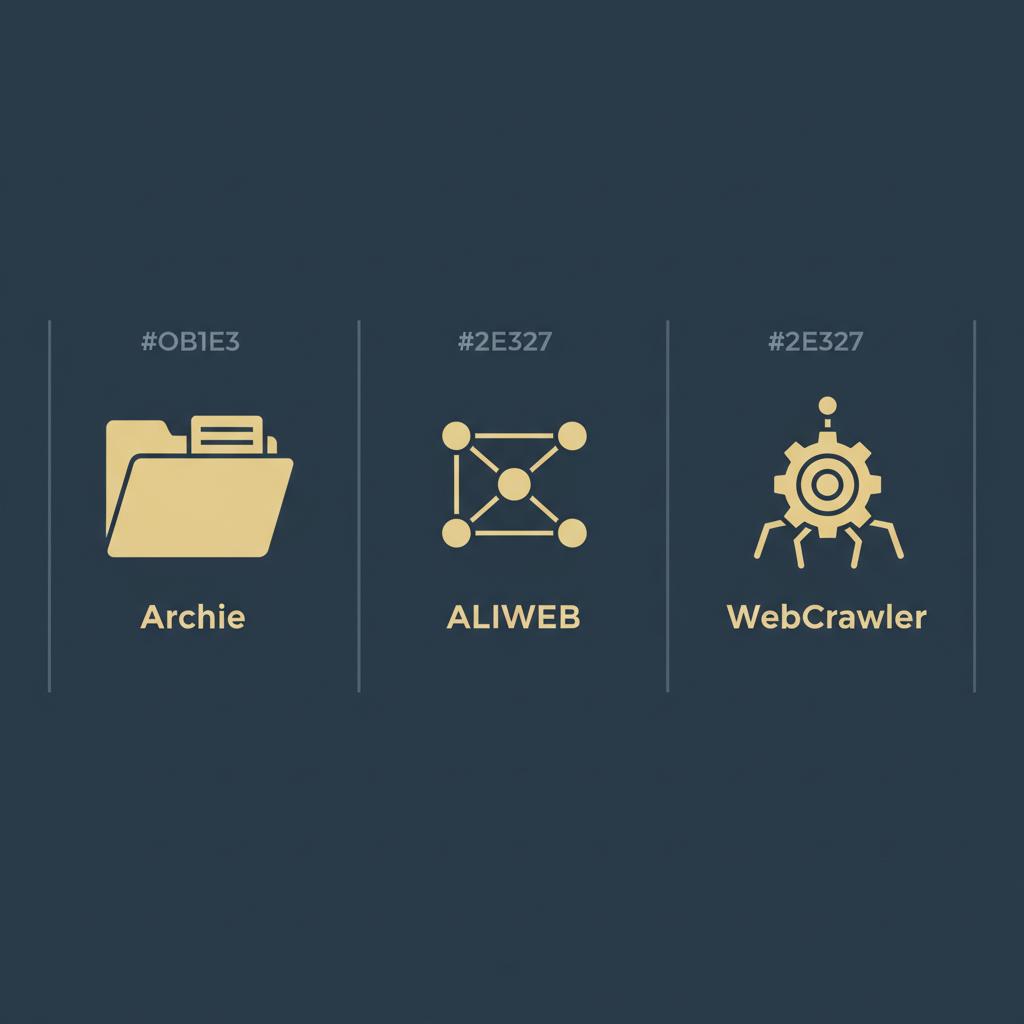
Short answer, conditioned on definition: under a broad networked resource definition the oldest commonly named system is Archie from 1990. If you require a web specific index, ALIWEB from 1993 is often cited as the earliest web index, and WebCrawler from 1994 is typically named when the criterion is the first widely used full text crawler based web engine. Archie entry on Wikipedia (see timeline of web search engines)
Put another way, the label oldest is not absolute. It is a function of scope and indexing method. Use the rest of this guide to check which framing fits your purpose.
Archie and the earliest networked indexers - the origin story for top search engines
Archie was developed to index files available on FTP servers and appeared in 1990. It created a searchable listing of file names on public FTP archives, which let users find software and documents across remote servers. This indexing of networked file systems is why many histories treat Archie as the foundational search system. Archie entry on Wikipedia
The answer depends on definition: under a broad networked resource definition Archie from 1990 is commonly named the oldest. For the World Wide Web ALIWEB from 1993 is often cited as the earliest web index and WebCrawler from 1994 is cited as the first widely used crawler based full text web engine.
Archie did not crawl the web as we know it. It scraped directory listings from FTP sites and built an index of file names. That design made it useful for discovering files on the network before the Web protocols and HTML pages became common. Contemporary institutional summaries place Archie at the start of the networked indexer lineage. Internet Society brief history
For readers looking for evidence, primary reports and later encyclopedic summaries treat Archie as the early ancestor of search architecture. Its method, scope, and purpose differ from later crawler based systems, which is why precise wording is necessary when you cite Archie as the oldest search engine.
Gopher search: Veronica and Jughead's role in early search
Gopher brought a menu driven way to access networked documents and services. Veronica and Jughead were search services developed in the early 1990s to index Gopher content. They made lists of items on Gopher servers searchable, extending the idea of indexed network content beyond FTP. Veronica entry on Wikipedia
Veronica and Jughead differed from Archie because they targeted a different protocol and user interface. Where Archie indexed file names on FTP, Veronica and Jughead indexed menu items and document titles in the Gopher space. That protocol specificity illustrates why historians group early systems by the resources they indexed rather than by a single chronology.
ALIWEB and the first web focused index among top search engines
ALIWEB was proposed in 1993 as an index for the World Wide Web where site owners submitted descriptions of their pages. It was designed to let web authors share index data about their content, rather than relying on automated crawling. That user submitted model is central to why some histories call ALIWEB the earliest web specific index. ALIWEB entry on Wikipedia

The ALIWEB approach contrasts with crawler based search because it depended on voluntary submissions and structured metadata. In some accounts that limits its reach compared with automated indexes, and that distinction is why ALIWEB is often discussed separately from engines that later crawled and indexed full text. Readers should note this when they encounter claims that present ALIWEB as the first web search engine.
WebCrawler and the rise of crawler based full text search among top search engines
WebCrawler was released in 1994 and was the first widely used search engine that created full text indexes by crawling web pages. That automated crawling mattered because it allowed discovery of page content without relying on site owners to submit index data, which in turn changed how discoverability worked on the Web. WebCrawler entry on Wikipedia
Where ALIWEB depended on user provided entries, WebCrawler fetched pages and indexed full page text. This difference in index creation method is a core reason why WebCrawler is cited when the criterion requires a crawler created full text web index. The operational implication was faster, broader discovery of web content as the Web expanded.
Why definitions matter: criteria historians use to declare an oldest among top search engines
Historians and reference works use a small set of criteria when they decide which system to call the oldest. Core checks include scope of indexed resources, the method used to build the index, protocol specificity, and contemporaneous documentation. These criteria help sort systems like Archie, Veronica, ALIWEB, and WebCrawler into coherent categories. Britannica entry on search engine
Quick verification steps to decide which candidate fits your definition
Applying these criteria produces different answers. If your scope is any networked resource, an FTP indexer like Archie meets the bar. If you require web specific coverage, ALIWEB is a candidate. If you require automated crawling and full text indexing for the Web, WebCrawler is the relevant pick. The checklist helps make that choice explicit.
Use the checklist to avoid conflating systems that are historically related but technically distinct. Explicit criteria reduce the risk of repeating simplified claims from secondary summaries, and they make it easier to map a claim back to a primary source.
Decision checklist: how to judge claims about the oldest top search engines
Step 1, confirm dates for the system you are evaluating. Look for contemporaneous documentation or archived pages that show when the system was first operational. For example the release years commonly attached to Archie, ALIWEB, and WebCrawler are widely cited but worth verifying in primary archives. Archie entry on Wikipedia
Step 2, confirm protocol and scope. Did the system index FTP, Gopher, or HTTP content? That determines whether it should be compared with other systems. Step 3, determine if the index was user submitted or automatically created by a crawler. Step 4, seek primary documentation or institutional summaries that describe the method and reach.
Mapping the checklist to common claims is practical. If someone cites Archie as the oldest, check it against networked resource scope and FTP indexing evidence. If the claim is about the first web search engine, check whether the claimant means a user submitted web index like ALIWEB or a crawler based index like WebCrawler.
Common mistakes and pitfalls when naming the oldest search engine
One frequent error is conflating indexers and crawlers. Archie indexed FTP listings rather than crawling HTML pages, so calling it a web crawler is inaccurate. Another mistake is ignoring protocol differences and comparing Gopher services with web specific engines without clarifying the scope. These errors produce misleading statements that spread through secondary summaries. Internet Society brief history
To avoid misinterpretation, always specify the criteria used to name the oldest system. When reading secondary sources, check whether they use a web focused definition or a networked resource definition. Clear wording prevents a small historical nuance from being amplified into a definitive claim that the evidence does not support.
Practical examples: evaluating claims step by step
Example 1, Archie as oldest under the networked indexer definition. Verify that Archie indexed FTP archives in 1990 and that this indexing covered multiple remote servers. That evidence supports naming Archie as the earliest system to provide a searchable index across networked content. Archie entry on Wikipedia
Example 2, ALIWEB as the earliest web index. Confirm that ALIWEB was proposed and implemented as a user submitted index for the World Wide Web in 1993. If your requirement is web focused indexing and you accept user submission as a valid index creation method, ALIWEB fits the definition. ALIWEB entry on Wikipedia
Example 3, WebCrawler as the first widely used crawler based web engine. Check that WebCrawler started indexing full text by crawling pages in 1994 and that it reached a user base large enough to be called widely used. If your criterion requires automated, full text indexing for the Web, WebCrawler is the right referent. WebCrawler entry on Wikipedia
Concise timeline of early search systems
1990, Archie appears as an FTP indexer that offered searchable file listings across servers. 1991 to 1992, Veronica and Jughead index Gopher content and extend searchable resources across a different protocol. 1993, ALIWEB is proposed as a web specific user submitted index. 1994, WebCrawler introduces widely used crawler based full text indexing for the Web. These entries match standard historical summaries. Archie entry on Wikipedia
Note that several experimental systems existed in the early 1990s and are less documented. When precision matters, return to archived primary pages or institutional histories rather than relying only on tertiary summaries.
Sources and suggested further reading on early search history
The core references used here include encyclopedia style summaries and institutional histories. For networked indexers and early internet chronology consult the Internet Society summary. For concise definitions and context about what a search engine is consult the Encyclopaedia Britannica entry on search engines. Wikipedia entries for Archie, Veronica, ALIWEB, and WebCrawler provide accessible starting points and links to primary material. Also see Telefónica's overview (Telefónica) and a practical history summary from Search Laboratory (Search Laboratory).
Primary sources for original implementations may be archived in internet archives or in early news posts by the researchers who built these systems. Use the decision checklist to evaluate primary material and to note where short lived experimental systems may complicate a clean chronology.
Key takeaways for operators researching top search engines

Definitions determine the answer. If you count any indexed networked resource, Archie from 1990 is commonly named the oldest. If you restrict the question to the World Wide Web, ALIWEB from 1993 is often cited for user submitted indexing and WebCrawler from 1994 is cited for the first widely used crawler based full text web index. Archie entry on Wikipedia
Before citing any system as the oldest, run the decision checklist: confirm dates, scope, indexing method, and primary documentation. If you want help structuring that verification into a repeatable research process, Orvus Limited can often help and can design a compact diagnostic and measurement plan that maps evidence to claims without implying specific outcomes.
Historians use criteria such as the scope of indexed resources, whether the index was user submitted or crawler created, protocol specificity, and contemporaneous documentation to decide which system fits the label oldest.
No, Archie indexed FTP archives and file listings, which makes it an early networked indexer rather than a web crawler or web specific search engine.
Start with institutional summaries and archived primary material, then cross check with encyclopedia entries and original project documentation where available.